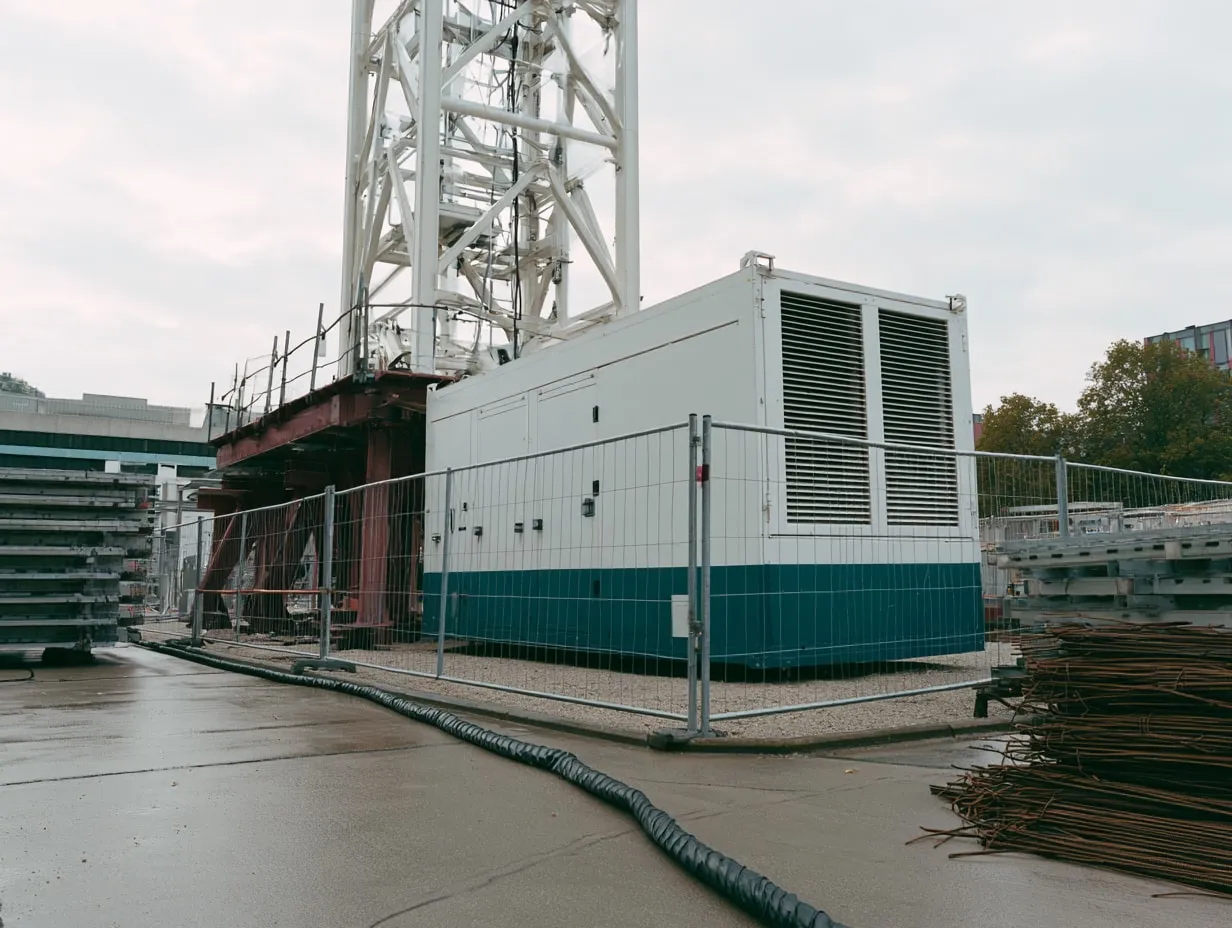
Tower cranes and hoists
Short, high lifting peaks with long gaps between them. The question is whether peaks fit inside the overload durations and the day’s energy fits the battery.
Industrial battery storage and site power
Battery storage for construction and industrial projects. Plan around your equipment, charging supply and operating schedule, then get a project-specific proposal.
Across the Ampd 200 and Ampd 400. Manufacturer-published figures; full ratings and sources are on the product pages.
Why sites add a battery
Not every site needs one. These are the situations where stored energy changes the numbers.
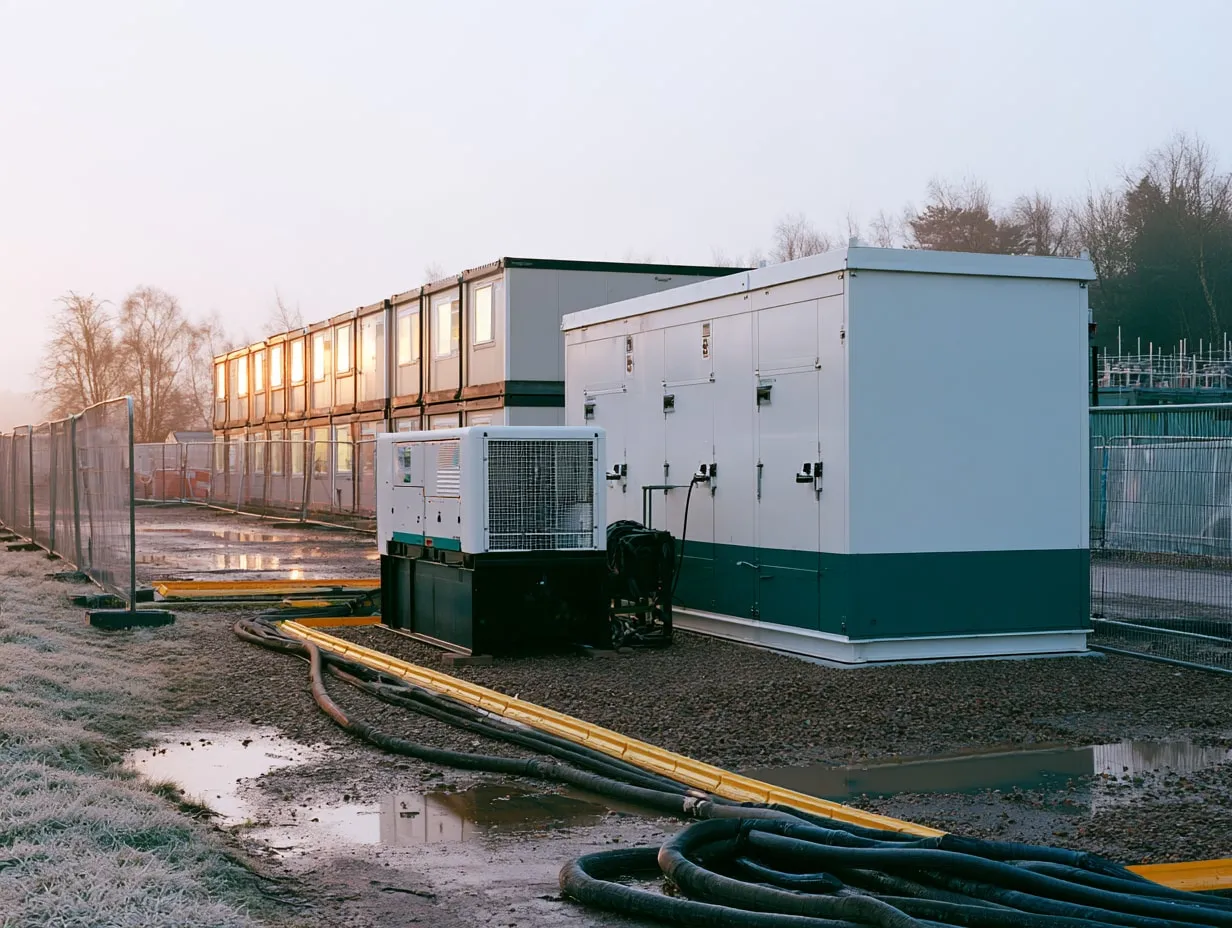
Generators are sized for the biggest demand, then spend most of the day lightly loaded. A battery lets the generator run fewer hours at a sensible load, or lets a smaller one do the job.
Generator + battery systemsThe connection covers the average demand but not a crane lift or a motor start. A battery charges steadily from the connection and supplies the peaks above its limit.
Limited grid site powerNight-time, noise limits or air-quality conditions can rule out an engine at set times. Stored energy carries a defined quiet period, charged outside those hours.
Construction site batteriesApplications
Our current range suits heavy site duties. These are the three we see most.
Short, high lifting peaks with long gaps between them. The question is whether peaks fit inside the overload durations and the day’s energy fits the battery.
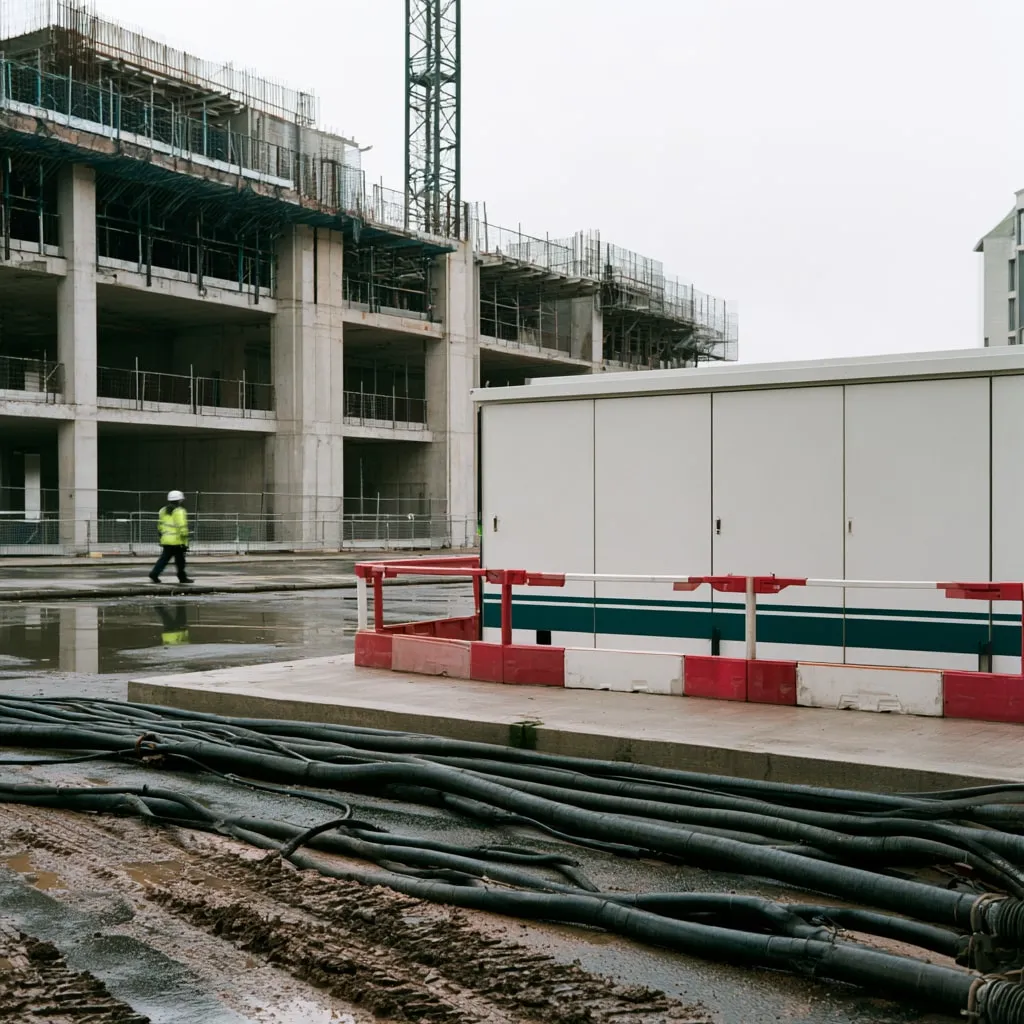
Loads change as the job moves from groundworks to fit-out. Plan around the phases, the charging source and who is responsible for distribution.
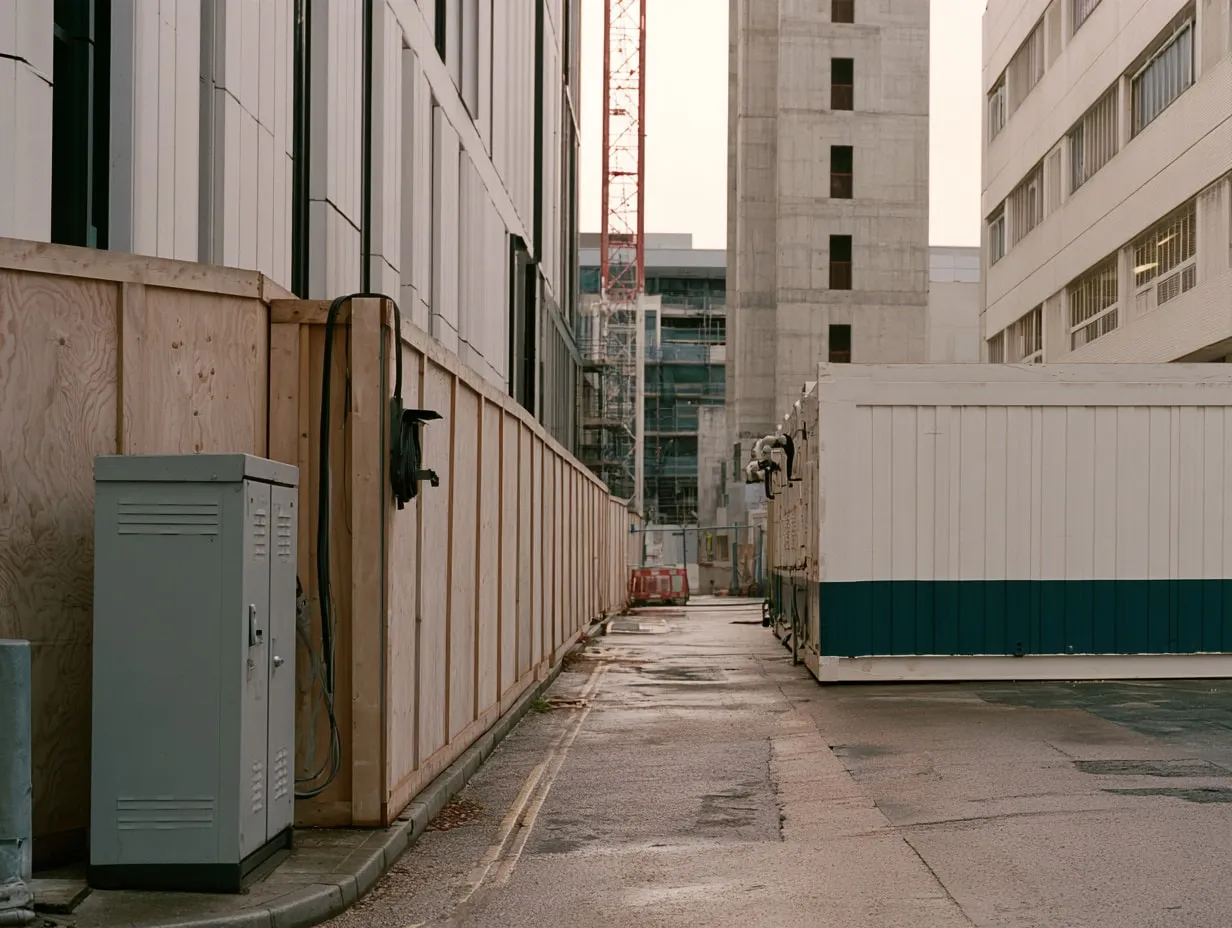
When the available supply is smaller than the peak demand, a battery can buffer it, provided the connection still covers the energy used over the day.
Illustrative images, not customer projects. Equipment and layout vary by project.
The units in our current range are substantial industrial systems. For smaller loads we assess the requirement first and confirm whether a suitable system can be supplied, rather than assume a fit.
How it works
A battery stores energy; it does not create it. Every arrangement starts with where the energy comes from and when.
Charge from an available connection and use the battery to meet short, higher demands or set operating periods. The connection has to supply the site’s energy over the day.
Run the generator when it is useful for supply and charging, and use stored energy during low-load or quiet periods. The generator stays; it runs less.
Meet a known load for a known time from stored energy, with a verified plan to recharge or exchange the battery before the next duty.
Products
Two mobile battery systems made by Ampd Energy. Nominal output and capacity first, then the short overload ratings that matter for motor starting and lifts.
IEC · Rev 1.3 · 29 April 2026
IEC · Rev 1.3 · 29 April 2026
Source: Ampd 200 IEC brochure, Rev 1.3, dated 29 April 2026; Ampd 400 IEC brochure, Rev 1.3, dated 29 April 2026. Manufacturer-published figures for the IEC variant, not independently tested. Specifications can change, so the current data sheet for your territory is confirmed in a project proposal.
Likely approach
Answer the questions to see a likely arrangement.
You will get a starting point, the reasons for it, and the information an engineer will ask for. Your answers carry into the project brief, so nothing is entered twice.
This one needs an assessment before any system is suggested. Send a brief and the requirement is reviewed first.
A likely starting point based on your answers. It is not a certified design; the system and configuration are confirmed by a technical assessment.
From brief to site
You describe the site, the equipment and the problem. Unknowns are fine.
A specialist supply partner assesses load, charging supply, schedule, environment and access.
You receive the proposed equipment and configuration, the costs, and who you would contract with.
Delivery, commissioning and support are arranged through the supply partner named in the proposal.
Timescales depend on the project and are agreed once the technical scope is understood. We would rather give you a date we can keep than a headline turnaround.
Guides
Power, apparent power and energy are three separate things. Know which is which before comparing any system with your load.
Compare whole arrangements and whole costs. A battery changes how a generator or grid connection is used; it does not always replace them.
Runtime comes from usable energy and average load. Nominal capacity overstates it; an average hides the peaks.
The unit's maximum charging input is a ceiling. What your connection or generator can spare, and for how long, decides whether the battery keeps up.
A two-part list: the project information a supplier needs, and the specifics a quote should commit to in writing.
Maximum Energy Solutions is a distributor. We help you specify the requirement and take your project brief to a specialist supply partner, who carries out the technical assessment and supplies the system. Your proposal states the equipment, the costs and the party you would contract with.
Sometimes, for a defined duty with a reliable way to recharge. More often on construction sites the battery works with a grid connection or a generator. A battery stores energy; it does not create it, so something still has to supply the energy the site uses over the day.
You do not need to know before you enquire. A current generator rating or a list of the main equipment is enough to start. Sizing depends on your average load, your peaks and how long they last, and the charging supply available, which is what the technical review establishes.
It depends on fuel use, hire rates, project length and one-off delivery and installation costs. Short projects and small fuel bills can make a battery the more expensive option. Our cost comparison shows the arithmetic with your own figures, including when the answer is no.
We take enquiries from the UK, Ireland, continental Europe, the United States and Canada. Product variants, approvals and service differ by country, so availability is confirmed for each project rather than promised in advance.
Tell us your preference in the brief, or choose “open to advice”. Which routes are available depends on the project, its location and its duration, and is confirmed in your proposal.
A short brief is enough to start. “Not sure” is an acceptable answer to every technical question, and you see a summary of your project before you add any contact details.